
Solar Roller Shades

Commercial solar roller shades are a proven, specification-driven solution for managing daylight, glare, and heat gain in modern commercial buildings. Designed for Division 12 (Furnishings) applications, these systems balance performance, aesthetics, and durability across a wide range of project types.
Effective Glare & Solar Control – Solar roller shades reduce glare on screens and work surfaces while filtering incoming sunlight. This improves visual comfort in offices, classrooms, and healthcare environments without fully blocking natural light.
Daylight Optimization & Occupant Comfort – High-performance solar fabrics allow daylight to penetrate the space while maintaining outward visibility. This creates brighter interiors, supports productivity, and reduces dependence on artificial lighting.
Energy Efficiency & HVAC Load Reduction – By limiting solar heat gain, solar roller shades help stabilize interior temperatures and reduce cooling demand. This contributes to lower energy use and supports building energy-efficiency goals.
Fabric Options for Any Application – Commercial solar roller shades are available in a wide range of openness factors, colors, and performance ratings, allowing designers to tailor light control, privacy, and heat reduction to each space and orientation.
Compatible with Motorization & Controls – Solar roller shade systems integrate seamlessly with motorization and automated controls, including wall switches, remotes, and building management systems. This makes them ideal for large window expanses, high ceilings, and code-driven daylight control strategies.
Built for Commercial Durability – Engineered components, reinforced hem bars, and commercial-grade hardware ensure long-term reliability in high-use environments such as healthcare, education, and corporate facilities.
Motorized & Automated Shades
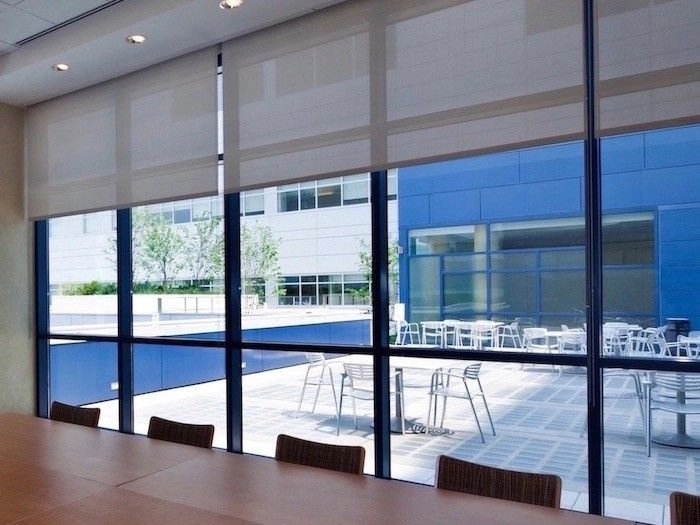


Motorized and automated shade systems provide advanced light control, energy efficiency, and operational convenience for modern commercial buildings. Commonly specified under Division 12 (Furnishings), these systems are ideal for projects where performance, safety, and integration are critical.
Improved Occupant Comfort & Productivity – Motorized shades allow precise, consistent control of daylight and glare throughout the day. Automated operation helps maintain comfortable light levels, reducing screen glare and visual fatigue in offices, classrooms, and healthcare environments.
Energy Efficiency & Building Performance – Automated shading systems can respond to sunlight conditions, schedules, or sensor input to reduce solar heat gain. By limiting overheating during peak sun hours, motorized shades help lower HVAC loads and support energy-efficiency goals.
Ideal for Large & Hard-to-Reach Windows – Motorization is especially valuable for high ceilings, expansive glass façades, atriums, and multi-story applications. Automated systems eliminate the need for manual operation, improving safety and accessibility while maintaining consistent performance.
Integration with Building Systems – Motorized shades can integrate with building management systems (BMS), daylight sensors, time clocks, and AV systems. This allows shading to operate automatically as part of a coordinated building strategy, enhancing both efficiency and user experience.
Consistent & Reliable Operation – Unlike manual systems, automated shades ensure uniform positioning across multiple windows. This consistency improves aesthetics, daylight control, and façade appearance—especially important in commercial and institutional projects.
Designed for Commercial Durability – Commercial motorized shade systems use heavy-duty motors, reinforced components, and engineered hardware designed for frequent use and long-term reliability in demanding environments.
Horizontal Blinds

Horizontal aluminum and faux wood blinds are a durable, cost-effective window covering solution widely specified for commercial and institutional environments. Commonly included under Division 12 (Furnishings), these systems provide reliable light control, privacy, and long-term performance in high-use facilities.
Precise Light Control & Privacy – The adjustable horizontal slats allow occupants to fine-tune daylight levels and privacy throughout the day. This makes horizontal blinds ideal for offices, classrooms, healthcare spaces, and administrative areas where flexibility is essential.
Durable & Low Maintenance – Manufactured from corrosion-resistant material, these blinds withstand heavy daily use and frequent operation. They are easy to clean, resistant to warping, and perform well in environments that demand durability and hygiene.
Cost-Effective Commercial Solution – Horizontal blinds offer an economical option for projects requiring dependable performance across many openings. Their long service life and minimal maintenance needs help reduce total lifecycle costs.
Suitable for Demanding Environments – Horizontal blinds are commonly specified for educational and government facilities due to their clean appearance, moisture resistance, and ability to meet institutional standards.
Broad Design & Specification Options – Available in multiple slat sizes, colors, and finishes, horizontal blinds can be coordinated with interior design palettes while still meeting functional and performance requirements.
Proven & Widely Specified – As a long-standing commercial window covering standard, horizontal blinds are familiar to general contractors, facility managers, and maintenance teams—making them a reliable, low-risk specification choice.
Exterior Sun Shades


Exterior shades are one of the most effective solar-control solutions for commercial projects. Installed outside the glazing, they stop heat and glare before it enters the building—delivering measurable performance benefits that interior systems alone cannot match.
Superior Heat & Glare Control – By intercepting solar radiation externally, exterior shades significantly reduce solar heat gain and glare. This improves occupant comfort, stabilizes interior temperatures, and reduces HVAC loads—especially valuable for large curtain walls and west- or south-facing façades.
Energy Efficiency & Operational Savings – Lower heat gain translates to reduced cooling demand and energy consumption. Exterior shading systems help projects meet energy-performance goals and support sustainability objectives without compromising daylight or views.
Daylight Without Sacrificing Views – High-performance exterior fabrics filter sunlight while preserving outward visibility. Spaces remain naturally lit, reducing reliance on artificial lighting and improving occupant experience in offices, classrooms, and healthcare environments.
Enhanced Building Performance – Exterior shades protect interior finishes and furnishings from UV exposure, extending material life. They also improve façade performance by reducing thermal stress on glazing systems.
Ideal for Automation & Large Openings – Exterior shades are well-suited for motorization and automation, allowing integration with building controls, sun sensors, and schedules. This makes them ideal for high elevations, expansive glass, and hard-to-reach areas common in commercial construction.
Designed for Commercial Durability – Engineered for wind, weather, and UV exposure, commercial exterior shading systems are built to perform in demanding environments—supporting long-term reliability and reduced maintenance.


